
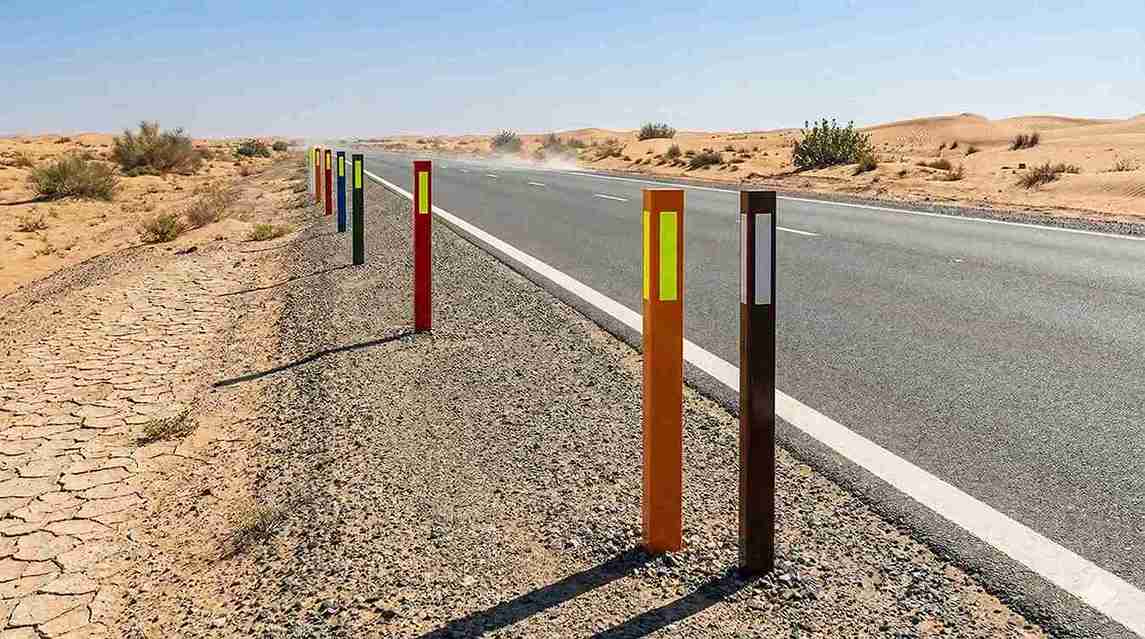
Top 10 Uses of Fiberglass Marker Posts in Roads & Oil Fields
Have you ever faced a situation where your road team or oil field crew could not quickly identify a pipeline route, underground cable, or hazard zone?
Quick Answer
Fiberglass marker posts are used to clearly mark pipelines, underground utilities, road edges, and safety zones in roads and oil fields. They are popular because they don’t rust, handle heat and dust well, and stay visible for many years in harsh outdoor environments.
What Are Fiberglass Marker Posts?
Fiberglass marker posts are strong posts made from FRP or GRP materials. They are installed outdoors to mark important routes and locations like pipelines, underground electrical cables, telecom lines, and restricted zones.
They are commonly used in:
- highways and roads
- oil and gas fields
- industrial sites and factories
- utility corridors
- desert locations
Why Fiberglass Marker Posts Are Preferred in Roads and Oil Fields
Roads and oil fields expose marker posts to tough conditions like:
- high heat and UV rays
- sandstorms and dust
- moisture and chemical exposure
- vehicle impact and vibration
Fiberglass marker posts are preferred because they are:
- corrosion-resistant and do not rust
- lightweight but strong
- non-conductive and safer near electrical cables
- long-lasting with low maintenance
- suitable for reflective strips and clear warning labels
Top 10 Uses of Fiberglass Marker Posts
1) Pipeline Route Marking
This is the most common use in oil and gas fields.
Fiberglass marker posts are installed along pipeline routes to show:
- pipeline type (oil, gas, water)
- pipeline direction arrows
- warning messages
- emergency contact details
- asset code or route number
This helps prevent accidental damage during digging and makes maintenance faster.
2) Underground Electrical Cable Identification
Fiberglass marker posts are widely used to identify buried electrical cable routes because fiberglass is non-conductive.
They help during:
- excavation work
- trenching
- road widening projects
- industrial utility upgrades
This reduces safety risk and avoids costly mistakes.
3) Fiber Optic and Telecom Cable Route Marking
Telecom and communication projects use fiberglass marker posts to mark:
- underground fiber optic routes
- telecom duct lines
- cable crossing points
- junction locations
This prevents cable cuts and reduces downtime.
4) Road Edge and Highway Boundary Marking
Fiberglass marker posts are used along road edges and shoulders to guide drivers, especially in:
- highways
- desert roads
- low-light areas
- dusty visibility conditions
When visibility is poor, these markers help drivers stay within safe driving areas.
5) Industrial Hazard Zone Marking
Factories, refineries, and industrial sites use fiberglass marker posts to mark:
- restricted entry zones
- chemical storage boundaries
- hazardous equipment areas
- safety warning zones
- vehicle movement paths
This improves safety and reduces accidents inside industrial premises.
6) Oil Field Wellhead and Valve Location Marking
In oil fields, many locations must be easy to identify quickly, such as:
- wellheads
- valves
- inspection points
- gathering stations
- testing areas
Fiberglass marker posts make these points visible from far distances, even in sandy environments.
7) Emergency Route and Safety Instruction Marking
Many oil field and highway locations require clear emergency markings such as:
- evacuation route direction
- muster point guidance
- emergency shutdown area labels
- fire safety point marking
Fiberglass marker posts allow clear instructions with weather-resistant labels.
8) Construction Zones and Road Work Marking
During road construction, infrastructure upgrades, and utility work, fiberglass marker posts help mark:
- excavation areas
- underground utility routes
- temporary hazard boundaries
- diversion information zones
They last longer than wooden markers and don’t corrode like metal markers.
9) GPS Mapping Reference Points and Asset Numbering
In large infrastructure projects, marker posts are used for:
- kilometer point or chainage marking
- asset numbering systems
- route mapping support
- inspection schedule reference
This is extremely useful in desert zones where there are fewer visible landmarks.
10) Reflective Safety Marking for Night Visibility
Fiberglass marker posts can be fitted with reflective strips to improve visibility at night.
This helps in:
- road edge guidance
- industrial roads inside oil fields
- pipeline corridor safety routes
- night-time inspections and driving
Reflective tape also helps during dust storms and poor lighting.
Comparison Table: Fiberglass vs Steel vs Wood Marker Posts
| Feature | Fiberglass Marker Post | Steel Marker Post | Wood Marker Post |
| Rust / corrosion | No rust | Rusts over time | No rust |
| Heat and UV tolerance | High | Medium | Low |
| Electrical safety | Non-conductive | Conductive | Non-conductive |
| Maintenance | Low | Medium to high | Medium |
| Suitable for reflective strips | Yes | Yes | Limited |
Key Tip: Avoid Fading and Poor Visibility
A common issue in hot regions is that marker post text fades quickly.
To avoid this:
- use UV-resistant printing
- use high-quality reflective tape
- use durable stickers or engraved labeling for important warnings
FAQs
What is the main purpose of fiberglass marker posts?
The main purpose is to mark pipelines, cables, routes, hazards, and safety zones clearly in outdoor environments like roads and oil fields.
Why are fiberglass marker posts commonly used in oil fields?
Because they don’t rust, survive harsh outdoor conditions, and help workers quickly find pipeline routes, valve zones, and safety boundaries.
Are fiberglass marker posts safe to use near electrical cables?
Yes. Fiberglass is non-conductive, making it safer to install near underground electrical utilities.
Can fiberglass marker posts handle extreme heat and desert weather?
Yes. Fiberglass marker posts are designed to perform in strong sun, heat, dust, and sandstorm conditions.
What details can be printed on fiberglass marker posts?
Typical printed details include warning text, route direction arrows, pipeline type, asset codes, and emergency contact numbers.
Are fiberglass marker posts used only for pipelines?
No. They are also used for road boundary marking, underground cables, telecom routes, hazard zones, and construction work zones.
Conclusion
Fiberglass marker posts are a smart choice for roads and oil fields because they provide long-term visibility, strong route identification, and better safety support. They are durable, corrosion-resistant, and suitable for harsh outdoor environments like desert and industrial sites.
If you are managing roads, utilities, or oil field operations, choosing fiberglass marker posts can reduce maintenance effort and improve safety across your site.