
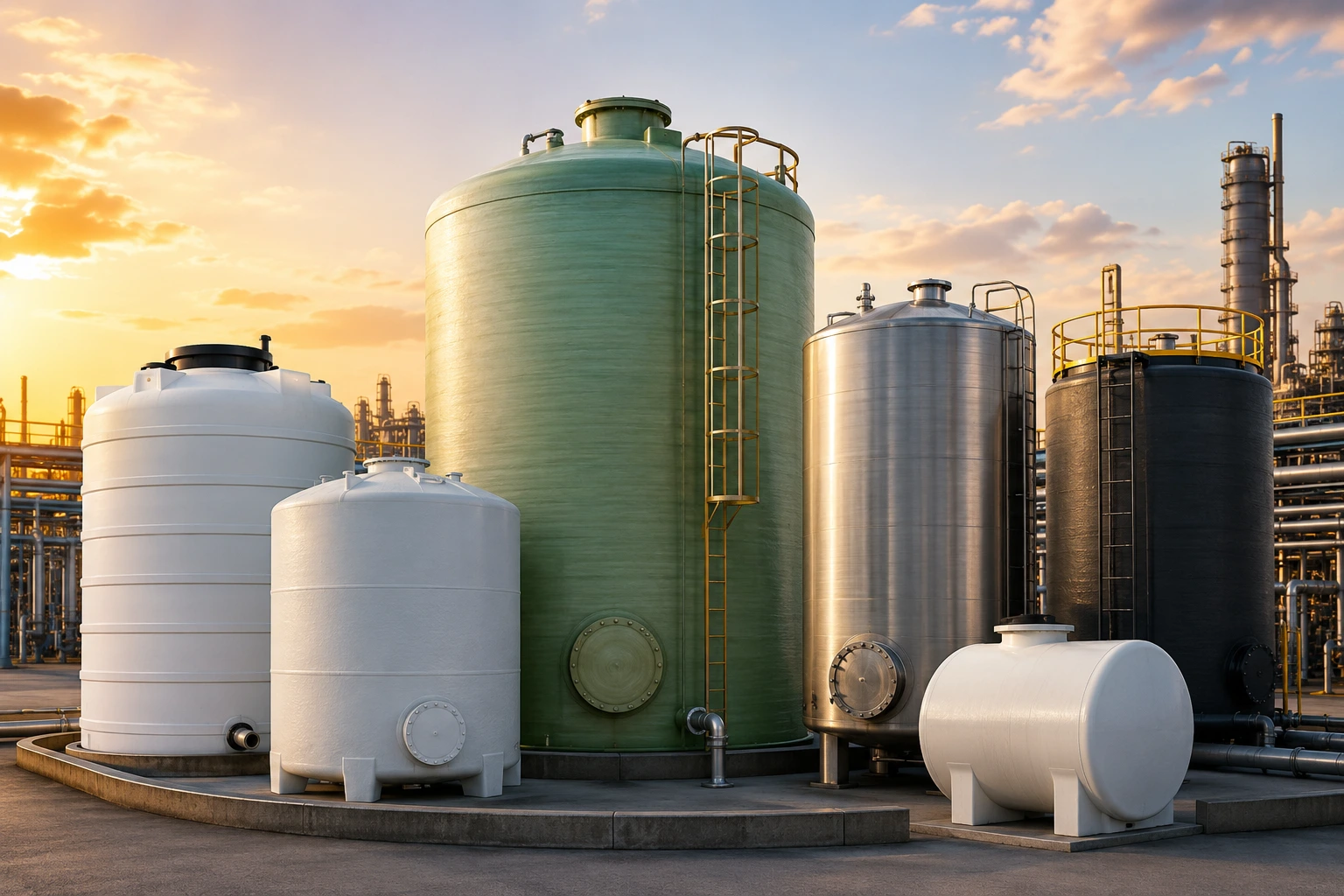
Best Chemical Storage Tank Materials Explained
Picture this: a tank cracks at 2 AM, chemicals spread across the floor, and a plant manager gets a call nobody wants to answer. That single moment traces back to one decision made months earlier – the material of the tank. Getting chemical storage tanks right is not a small detail buried in a spec sheet. It decides whether a facility runs safely for thirty years or deals with leaks, rust, and fines within five. FRP, HDPE, stainless steel, carbon steel, and polypropylene each behave differently once chemicals, heat, and pressure enter the picture. This guide walks through each material in plain words, so a plant owner, engineer, or procurement manager can choose with confidence instead of guessing.
Choosing the Right Material Is the First Step to Safe Chemical Storage
A tank does one job every hour of every day: it holds a chemical against its own walls without giving in. That constant contact is where most tank failures actually start.
Pick the wrong material, and the chemical starts fighting back – slowly eating away at the walls, weakening seams, or reacting in ways nobody planned for. Rust spreads. Cracks form where nobody’s watching. What looked like a budget-friendly purchase can quickly become the most expensive decision once repairs, downtime, and replacement costs start piling up. On top of that, failing safety or environmental compliance inspections can interrupt production and create costly operational setbacks. Engineers lean on a chemical compatibility chart for exactly this reason – it tells you, before a single drop goes in, whether a material and a chemical can coexist. ASTM standards back this testing up, giving manufacturers (and buyers) a shared, provable baseline.
Understanding material compatibility is also one of the biggest factors affecting the total cost of ownership, as explained in our guide on FRP vs Steel Tanks: Which Offers the Lowest Total Storage Tank Cost?
- Strong acid meets the wrong metal → corrosion sets in fast
- Right material, correct pH match → decades of reliable service
- Cheap tank now → expensive repairs later
- Smart material choice → lower risk, steadier costs, fewer surprises
Common Materials Used to Manufacture Chemical Storage Tanks
No single material wins every time. Some shrug off acids for decades. Others are built for mild use and a tighter budget. Here’s how the main options actually stack up.
FRP Chemical Tanks
FRP is short for Fiberglass Reinforced Plastic, and it’s built by layering fiberglass with a resin – often vinyl ester resin, isophthalic resin, or orthophthalic resin. The result is a tank that laughs off corrosion in a way plain steel or plastic simply can’t.
Best for: acids, alkalis, wastewater, and other tough industrial chemicals
Why people choose it:
- Outstanding corrosion resistance
- Barely any maintenance once installed
- Handles UV exposure without breaking down
- Built custom for almost any shape or size
- Lower cost over its full lifetime, even with a higher sticker price
Where it falls short:
- Needs the right resin matched to the right chemical
- Costs more upfront than HDPE
Talk to plant engineers who’ve used FRP chemical tanks for a decade or two, and the story is usually the same: a tank that quietly does its job year after year, with lifespans stretching past 20, sometimes even 30 years.
HDPE Chemical Storage Tanks
HDPE stands for High Density Polyethylene – a lighter, more affordable plastic tank, usually made through rotational molding. It’s the practical pick when chemicals are on the milder side.
Where it shines: water treatment, agriculture, and light-duty chemical storage
What people like: low price, easy to move and install, simple setup What to watch for: struggles outside a narrow temperature range, can age under sun exposure without UV stabilizers, and doesn’t match FRP or steel for raw strength
Stainless Steel Chemical Tanks
Stainless steel tanks are commonly manufactured using grades such as SS304 and SS316. These materials are widely selected for hygienic applications because they combine durability with surfaces that are easy to clean, making them suitable for sectors like food processing and pharmaceutical manufacturing.
Best for: food-grade chemicals, pharmaceutical liquids, high-heat applications
Strengths: hygienic finish, tough build, holds up under pressure Weak spot: the price tag, plus certain acids can trigger chloride corrosion over time
Carbon Steel Chemical Tanks
Carbon steel earns its spot with petroleum, oils, and fuels. It’s strong and it’s affordable – but leave it uncoated, and rust will find a way in.
Strengths: serious strength, budget-friendly Trade-off: prone to rust, needs epoxy coating and upkeep to stay within API standards
Polypropylene (PP) Chemical Tanks
Polypropylene tanks handle moderate chemicals well and show up often in lab settings, where smaller volumes and chemical resistance matter more than sheer size.
What works: chemical resistant, easy to handle thanks to low weight What doesn’t: limited on size options, and not as structurally tough as FRP or steel
Material Comparison Table
Sometimes a side-by-side view says more than paragraphs ever could.
| Feature | FRP | HDPE | Stainless Steel | Carbon Steel | PP |
| Corrosion Resistance | ★★★★★ | ★★★★☆ | ★★★★☆ | ★★☆☆☆ | ★★★★☆ |
| Strength | ★★★★★ | ★★★☆☆ | ★★★★★ | ★★★★★ | ★★★☆☆ |
| Weight | Light | Very Light | Heavy | Heavy | Light |
| Lifespan | 20-30+ Years | 10-20 Years | 20+ Years | Varies | 10-15 Years |
| Maintenance | Low | Low | Medium | High | Low |
| Cost | Medium | Low | High | Medium | Medium |
Which Material Is Best for Different Chemicals?
Matching the chemical to the material isn’t guesswork – it follows a pattern most engineers already know by heart.
| Chemical | Recommended Material |
| Sulfuric Acid | FRP |
| Hydrochloric Acid | FRP |
| Sodium Hydroxide | FRP / HDPE |
| Water | HDPE |
| Petroleum | Carbon Steel |
| Food Chemicals | Stainless Steel |
Why FRP Chemical Tanks Are Becoming the Preferred Choice
Something’s shifted across industrial buyers over the past few years – more of them are walking away from older metal tanks and choosing FRP instead. It’s not a trend for its own sake; it comes down to what actually holds up over time.
Here’s what keeps pulling people toward these fiberglass tanks:
- Serious resistance to acids and alkalis, without constant babysitting
- A service life that stretches decades, not just years
- Light enough to transport and install without heavy equipment everywhere
- Custom-built to fit odd site layouts or specific volume needs
- Lower total cost once you count in years of avoided repairs
If you’re planning a new installation or replacing aging tanks, explore our FRP chemical storage tanks designed for corrosive industrial environments and customized to your application requirements.
Chemical plants, water treatment facilities, oil and gas sites, desalination plants, fertilizer producers, mining operations, and manufacturers all lean on this material now – and honestly, once you see the corrosion resistance and lighter logistics side by side with older options, it’s easy to understand why. These facilities also rely on corrosion-resistant FRP infrastructure, including access platforms and walkways. Learn how FRP grating load capacity affects safety and maintenance around chemical storage installations.
How to Choose the Right Chemical Storage Tank
Before signing off on a purchase, run through this list:
- Confirm the chemical is actually compatible with the tank material
- Work out the capacity the site really needs
- Check the operating temperature range
- Confirm the pressure rating required
- Decide between indoor and outdoor installation
- Check UV resistance if it’s going outside
- Verify it meets OSHA, EPA, and ASME requirements
- Look at ongoing maintenance demands
- Ask for manufacturer certifications, including ISO 9001
- Weigh the purchase price against the full lifecycle cost – not just the invoice total
Working with an experienced FRP supplier in Saudi Arabia also ensures your storage tank is manufactured to the correct specifications, tested for chemical compatibility, and supported with reliable after-sales service.
Frequently Asked Questions (FAQ)
Which material is best for chemical storage tanks?
It depends on the chemical. FRP handles acids and alkalis well. HDPE suits milder chemicals. Stainless steel fits food and pharma needs.
Are FRP tanks better than HDPE tanks?
FRP resists corrosion better and lasts longer. HDPE costs less and works fine for gentler chemicals.
How long do FRP chemical tanks last?
Most last between 20 and 30+ years with very little upkeep.
Can stainless steel store acids?
Some acids cause chloride corrosion in stainless steel, so always check a compatibility chart first.
What chemicals should not be stored in carbon steel tanks?
Strong, corrosive acids should stay out of carbon steel unless it’s properly epoxy-coated.
How do I select the correct tank material?
Line up the chemical, temperature, pressure, and budget against a compatibility chart before deciding.
Conclusion
There’s no single “best” tank material – anyone who tells you otherwise hasn’t dealt with enough real-world chemical storage tanks. For businesses looking for reliable FRP solutions across multiple industries, Al Ragheedh Fiberglass manufactures corrosion-resistant fiberglass products engineered for long-term industrial performance. The right pick depends on what chemical you’re storing, how hot or cold it runs, the pressure involved, and how long you want it to last without headaches. Chasing the lowest price tag alone tends to backfire. For plants dealing with acids, alkalis, or other aggressive chemicals, FRP usually wins out on durability, corrosion resistance, and long-term value – which is exactly why so many industrial sites have already made the switch.
If your current setup is giving you doubts, don’t wait for a leak to make the decision for you. Request a chemical compatibility assessment, talk to an FRP tank manufacturer about your specific site, or look into a custom-built tank designed around what you actually need.