
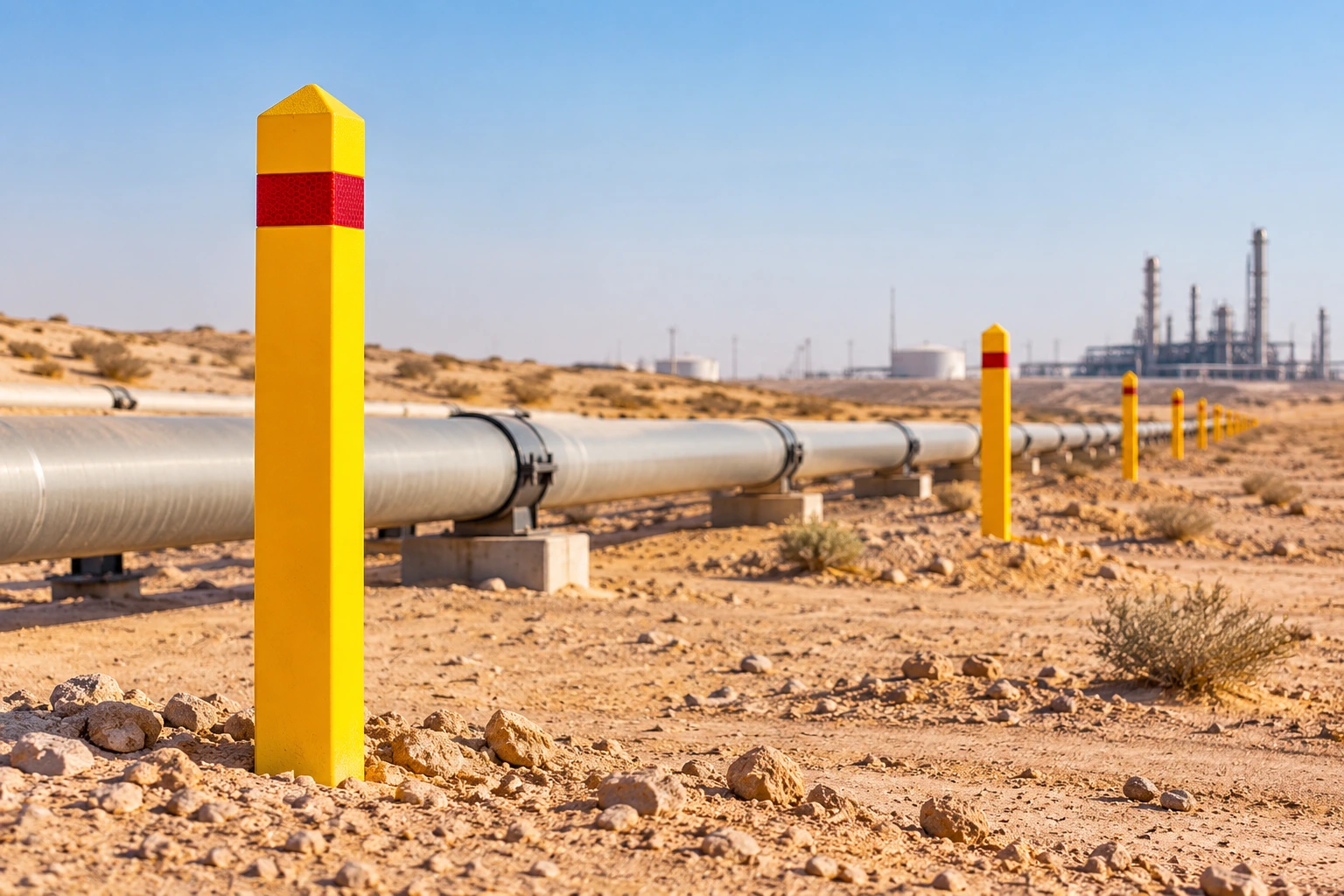
Fiberglass Marker Post for Pipeline Projects: A Practical Buyer’s Guide
A buried pipeline is invisible, and that is exactly why it gets hit. A contractor with an excavator, a farmer with a plough or a survey crew with a post driver can damage a line in seconds. The repair bill is only the start of the loss. Fiberglass marker post solve this problem by showing the pipeline route above ground, year after year. They are made from fiberglass reinforced plastic (FRP), so they do not rust, rot or need repainting. This guide explains how fiberglass marker post protect pipelines, how they compare with other materials and what to check before you order. In Saudi Arabia’s heat and sand, these choices matter even more.
What Do Fiberglass Marker Post Do on a Pipeline?
Fiberglass marker post are slim posts that stand above ground and show where a pipeline runs below. Pipeline markers warn people before they dig, and they give anyone who needs it the operator’s contact details. A clear marker can prevent a damaged line, a shutdown or a safety incident.
A good pipeline marker usually shows:
- A warning word such as Warning, Caution or Danger.
- The product carried, such as gas or oil.
- The operator’s name.
- A phone number that works at all times.
This list follows the United States rule for gas pipelines, 49 CFR 192.707. It requires a warning word, the pipeline description, the operator’s name and an always-available phone number. Your project may follow a different standard, so always match your client’s specification.
Where Should Pipeline Markers Be Placed?
Placement decides whether a marker does its job. A post in the wrong spot is easy to miss, and a missing post leaves a gap in the warning.
The same US rule requires markers on buried lines at each public road and railroad crossing, and wherever needed to reduce damage. In practice, project teams often place posts at:
- Road, rail and track crossings.
- Bends and changes in direction.
- Valve points and fence lines.
- Property boundaries.
Many operators also try to keep the next post in sight from the last one. Your project specification sets the final spacing.
Why Choose Fiberglass Over Wood or Concrete?
Fiberglass is not the only choice, but it removes several daily headaches. Compare the three common materials before you decide.
| Material | Handling | Weather performance | Upkeep |
| Fiberglass (FRP) | Light and easy to carry | Does not rust or rot; resists UV and moisture | Low; no repainting |
| Wood | Light to medium | Can crack, rot or fade over time | Needs treatment or replacement |
| Concrete | Heavy; harder to move in bulk | Strong, but can chip | Low to medium |
Fiberglass is also non-conductive. That makes it a safe choice near electrical and communication lines. If your route runs beside power cables, this matters on day one. Al Ragheedh also makes a redwood marker post for roads, trails and property lines, so you can compare both options for your site.
Can Fiberglass Marker Post Handle Saudi Heat and Sand?
Yes, when the post is built for it. Strong sun, high heat and blowing sand break down weak materials quickly. Pipeline routes in the Eastern Province and around Riyadh face all three.
Al Ragheedh Fiber Glass Factory is a fiberglass manufacturer in Saudi Arabia based in Al-Jubail and operating since 2003. Its posts are UV-protected and built for long outdoor use in the region’s harsh climate. Ask any supplier how the printed warning is applied, because faded text defeats the purpose of a marker.
What Should You Check Before Ordering Pipeline Markers?
A short checklist saves costly changes after delivery. Confirm these points with your supplier and your client’s engineer.
- Message. Decide the warning word, language, operator name and phone number.
- Colour. The APWA colour code marks oil and gas in yellow and communication lines in orange. Pipeline owners often use similar logic, but follow your client’s specification.
- Height and profile. Choose a post tall enough to be seen over local vegetation or sand.
- Night visibility. Reflective decals help crews and patrol vehicles spot posts after dark.
- Quantity and delivery. Confirm production time for your volume.
Al Ragheedh’s fiberglass marker post can be printed with logos, warning messages, colour codes and reflective decals. The company supplies bulk and custom orders, from 50 units to 5,000, for telecom, utility and road projects.
Frequently Asked Questions
Are fiberglass marker post safe near power lines?
Yes. FRP does not conduct electricity, so fiberglass marker post suit routes that run close to electrical and communication lines.
Do fiberglass marker post need maintenance?
Very little. They do not rust, rot or need repainting. Check them during routine pipeline patrols and replace any post that is damaged or unreadable.
Can I order custom-printed pipeline markers in bulk?
Yes. Al Ragheedh supplies custom-printed fiberglass marker post in bulk for utility, telecom and road projects. For a wider overview of the product, read this guide to fiberglass marker post.
Conclusion
Pipeline markers are a small cost compared with a damaged line. Fiberglass marker post give you a light, non-conductive and low-maintenance way to protect your route. Decide your message, colour, height and quantity early, and confirm placement with your client’s specification.
If you plan a pipeline project in Saudi Arabia, talk to a local manufacturer about custom printing and bulk supply. You can also check the company’s location and contact details before you request a quote.