
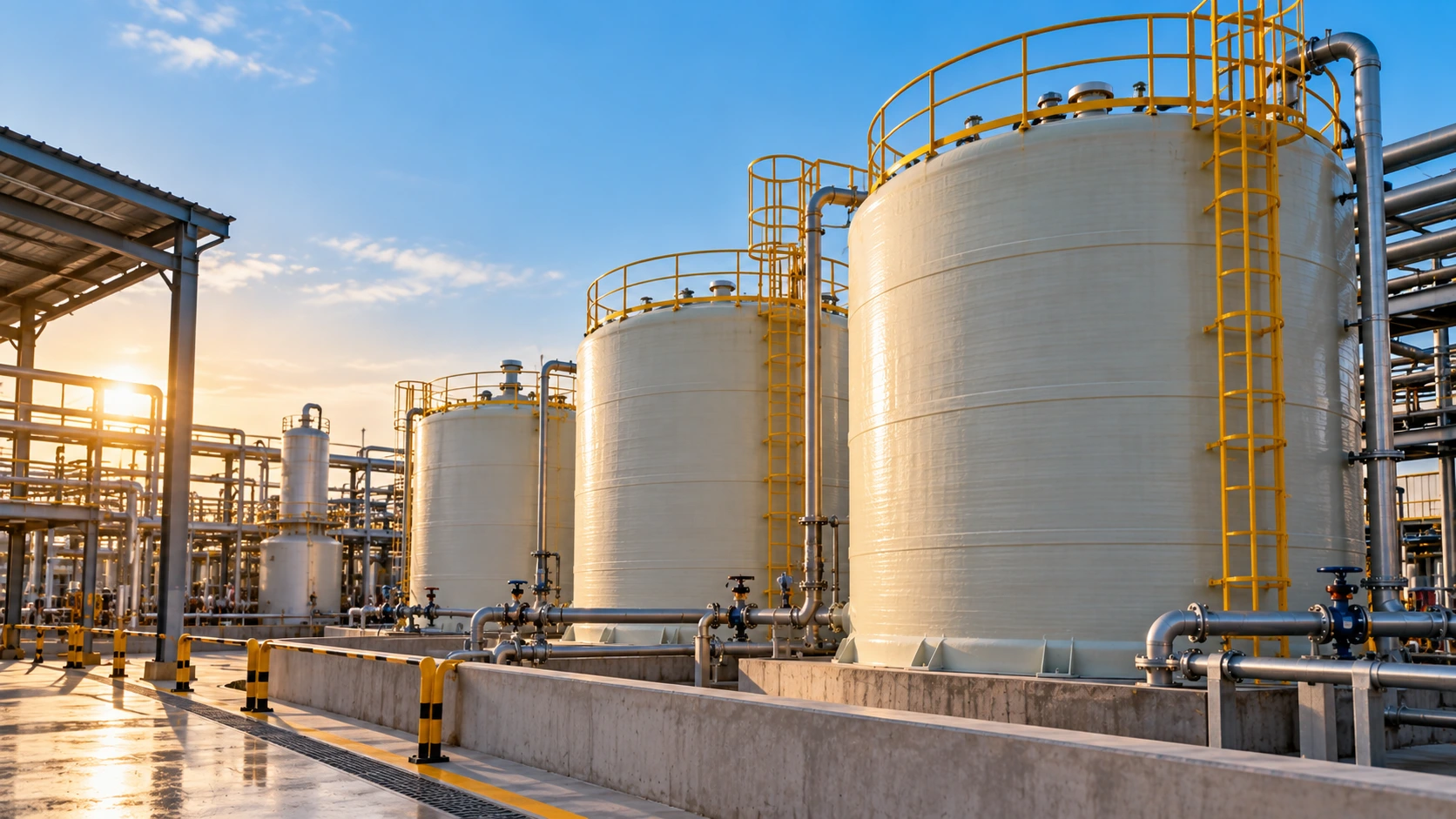
Chemical Storage Tanks: How to Match the Material to Your Chemical
A tank that holds water safely for years can fail within months when it holds the wrong acid. That is why choosing chemical storage tanks should start with the liquid, not the tank. Cracks, leaks and slow wall damage often trace back to one early mistake: a material that does not suit the chemical. This guide shows you how to match tank material to the chemical you store. It also explains how FRP chemical tanks resist corrosion, where they need extra care and what to send your supplier before you ask for a quote.
Why Does the Chemical Decide the Tank Material?
The stored chemical controls how a tank wall ages. Each material reacts differently to each chemical, so there is no single best tank for every liquid.
One tank maker’s buying guide advises engineers to name the exact chemical and its concentration. A generic name is not enough, because a weak solution and a strong one can behave very differently. Also, a tank that suits water may not suit chemicals at all. Treat water performance as irrelevant when you compare options.
What Should You Know Before You Choose?
Collect these facts first. They narrow your options faster than any brochure.
- The chemical name and exact concentration.
- The highest storage temperature, including summer heat on outdoor tanks.
- Whether the tank sits in direct sun.
- The volume you need and how often you refill.
- Whether the liquid leaves sludge that needs full drainage.
- The space you have for secondary containment.
How Do FRP Chemical Tanks Resist Chemicals?
FRP chemical tanks are built from glass fibre and a thermosetting resin. The glass gives strength, and the resin gives chemical resistance. The inner layer touching the liquid is usually resin-rich, often with a thin surface veil.
The resin type matters most. Vinyl ester is widely chosen for aggressive duty, such as concentrated hydrochloric acid and strong caustic solutions. Isophthalic polyester costs less but is generally unsuitable for strong acids or caustics at higher temperatures.
Al Ragheedh Fiber Glass Factory, a fiberglass manufacturer in Saudi Arabia based in Al-Jubail since 2003, makes fiberglass chemical storage tanks and offers custom fabrication. The same construction approach applies to its FRP fuel storage tanks.
Which Material Suits Which Chemical?
Use this table as a starting point only. Always confirm with the resin maker’s chemical resistance chart for your concentration and temperature.
| Chemical | Common approach | What to check |
| Hydrochloric acid | Vinyl ester FRP | Concentration and temperature |
| Sodium hydroxide (caustic) | Vinyl ester FRP; polyethylene is also common | Temperature |
| Sodium hypochlorite (bleach) | Vinyl ester FRP | Heat and sunlight |
| Sulfuric acid above 70% | FRP shell with a PTFE, ECTFE or PVDF liner | Resin limits at high strength |
| Hydrofluoric and fluorosilicic acids | Confirm in writing before buying | Attack on glass fibre |
Sources differ on fluoride acids. One polyethylene tank maker warns that hydrofluorosilicic acid can damage the glass in FRP, while some FRP makers list it as a stored chemical. Ask for written confirmation from the resin supplier.
The same polyethylene maker says stainless steel is poorly compatible with many acidic chemicals. That claim comes from a supplier of competing tanks, so test it against a neutral resistance chart.
Why Do Material Mistakes Cause Early Failure?
Most failures come from decisions, not from weak material. Wrong resin selection, UV damage, manufacturing defects and missing maintenance are common causes, as this guide to fiberglass tank failure reasons explains.
In Saudi Arabia, outdoor tanks also face strong sun and high heat. Tell your supplier about the site, not just the chemical.
What Should You Send Your Supplier?
A complete brief prevents guesswork and speeds up your quote. Send:
- The chemical name, concentration and safety data sheet.
- Minimum and maximum operating temperature.
- Tank size, shape and orientation.
- Indoor or outdoor location.
- Connection, drain and containment needs.
Then ask which standard the tank follows, such as ASME RTP-1 for reinforced thermoset plastic equipment. Also ask whether the resin was tested to ASTM C581, the test for resin chemical resistance in glass fibre structures.
Frequently Asked Questions
Are FRP chemical tanks suitable for every chemical?
No. FRP performs well with many acids, alkalis and salts, but some chemicals need a different resin or liner. Strong sulfuric acid and fluoride acids are the usual cases that need extra checks.
Can I use a water tank for chemicals?
No. A tank that suits water may fail with chemicals, because the stored liquid can degrade the wall and cause leaks.
Conclusion
The right tank starts with the chemical. Know the name, concentration and temperature, then match them to a resin or material that can handle them. FRP chemical tanks are a strong option for many acids and alkalis, but a few chemicals need a special liner or a different material.
If you plan a project in Saudi Arabia, share your chemical data with the manufacturer early. You can also check the company’s location and contact details before you request a quote.